
OcCre 12010S 1/50 Santa Maria Starter Pack Wooden Model Ship Kit
History of Christopher Columbus Ship Santa Maria
The Santa María Ship departed from the port of Palos de la Frontera in Spain on August 3, 1492, under Columbus' command. This voyage marked the beginning of European exploration of the American continent.
The Santa María was a nao, a type of robust ship suitable for long sea voyages. During the journey, Columbus and his crew faced numerous challenges, including storms and the uncertainty of navigating towards unknown lands. Finally, on October 12, 1492, they sighted land, arriving at an island in what we now know as the Bahamas. This event is considered one of the most significant moments in history, as it opened the door to the exploration and colonization of the New World.
Unfortunately, the Santa María did not complete the return journey to Spain. On December 25, 1492, it ran aground on a sandbank off the coast of what is now Haiti. The crew used the remains of the ship to build a fort called La Navidad, where some sailors stayed while Columbus returned to Spain with the news of the discovery.
The Santa María, despite its tragic end, remains a symbol of the age of exploration and the adventurous spirit that characterized the Renaissance.
How big was the Santa Maria ship?
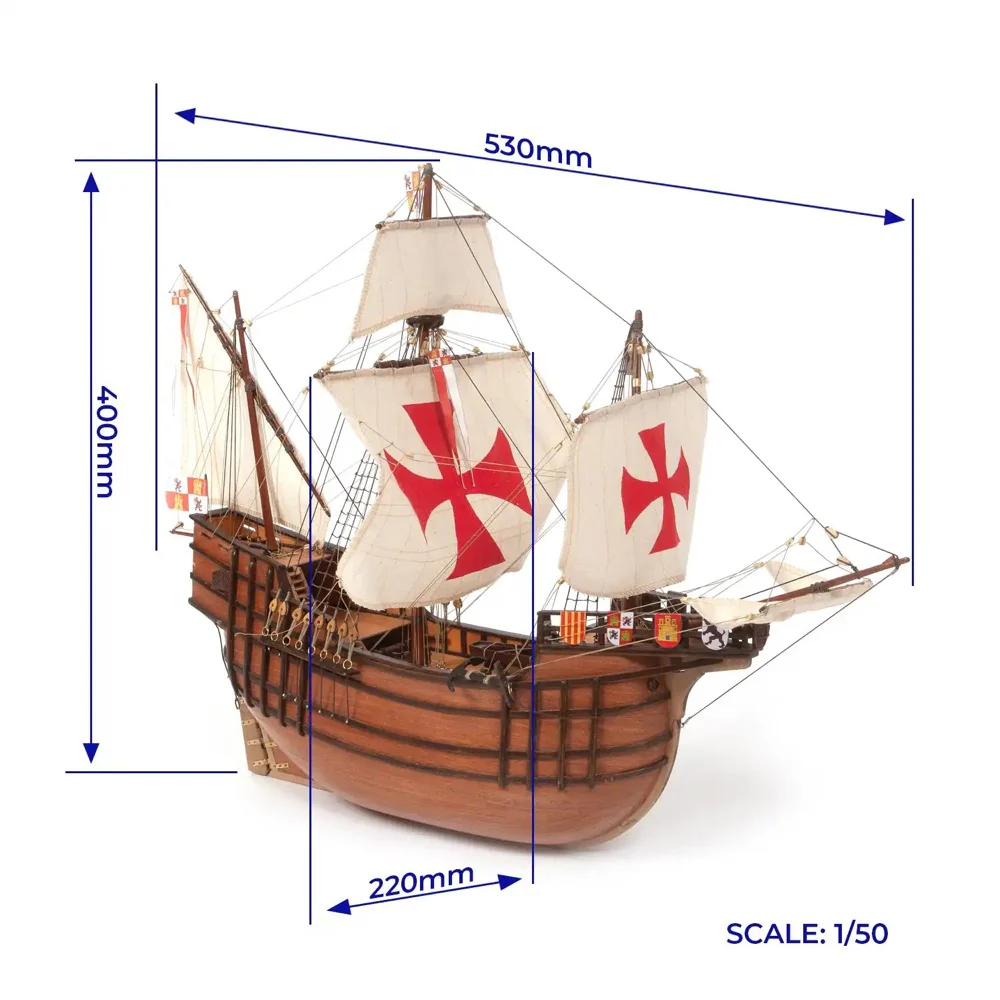
The Santa María was about 70 feet (21 meters) long and 25 feet (7.6 meters) wide. It had a draft of around 6 feet (1.8 meters) and a tonnage of about 100 tons. It was the largest of Columbus's three ships and carried a crew of around 40 men.
The Nao Santa María, the beginner's ship model
If you are thinking of getting started in naval modeling, the Nao Santa María is the perfect model.
Contents
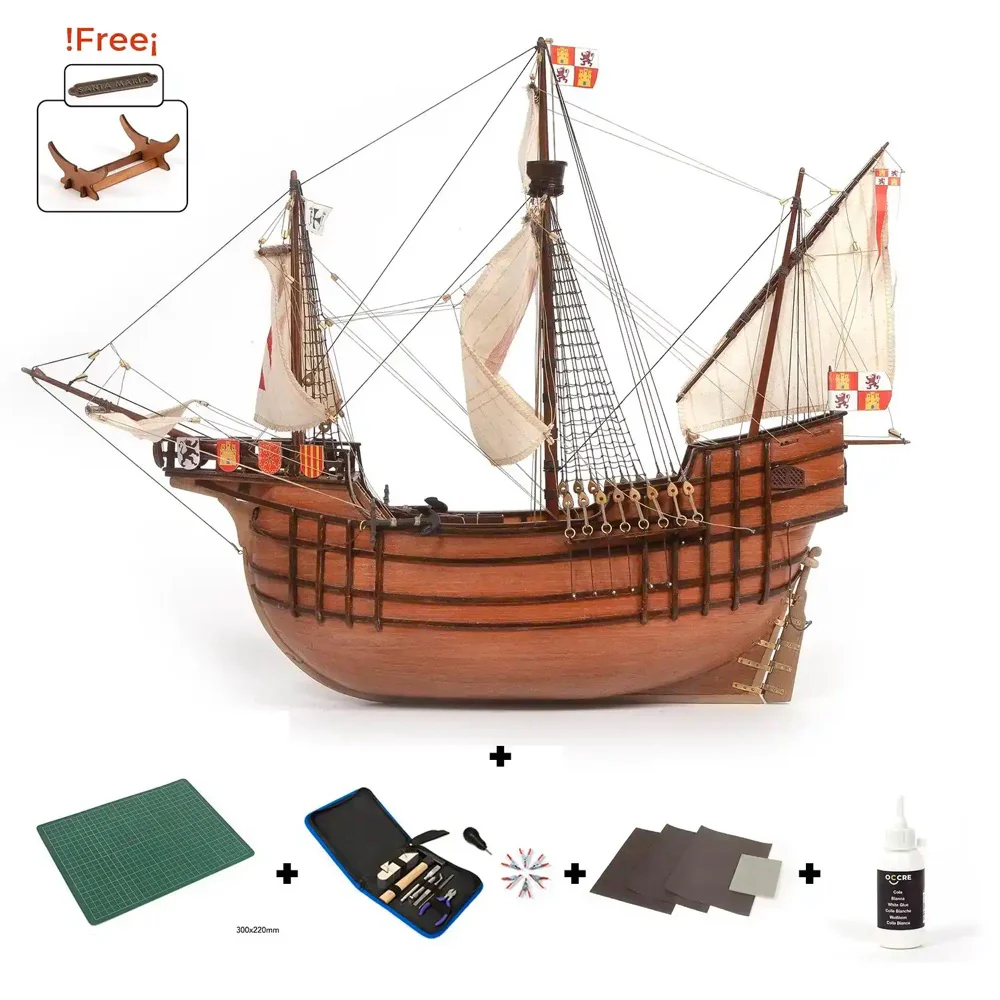
- Tools Pack
- Pin Pusher
- White glue
- Cutting mat
- Sandpaper pack + sanding sponge
- Basic stand support
- Cast plate with the model name
Includes
- Cast pieces
- Step-by-step video tutorials
- Instructions in 5 languages
- Step-by-step HD photos
- Glue and tool usage guide
- Parts list with measurements and materials
- IP sheet with photos for identifying parts
- Scale plans
- Lifetime warranty
Original: $249.53
-65%$249.53
$87.34More Images


OcCre 12010S 1/50 Santa Maria Starter Pack Wooden Model Ship Kit
History of Christopher Columbus Ship Santa Maria
The Santa María Ship departed from the port of Palos de la Frontera in Spain on August 3, 1492, under Columbus' command. This voyage marked the beginning of European exploration of the American continent.
The Santa María was a nao, a type of robust ship suitable for long sea voyages. During the journey, Columbus and his crew faced numerous challenges, including storms and the uncertainty of navigating towards unknown lands. Finally, on October 12, 1492, they sighted land, arriving at an island in what we now know as the Bahamas. This event is considered one of the most significant moments in history, as it opened the door to the exploration and colonization of the New World.
Unfortunately, the Santa María did not complete the return journey to Spain. On December 25, 1492, it ran aground on a sandbank off the coast of what is now Haiti. The crew used the remains of the ship to build a fort called La Navidad, where some sailors stayed while Columbus returned to Spain with the news of the discovery.
The Santa María, despite its tragic end, remains a symbol of the age of exploration and the adventurous spirit that characterized the Renaissance.
How big was the Santa Maria ship?
The Santa María was about 70 feet (21 meters) long and 25 feet (7.6 meters) wide. It had a draft of around 6 feet (1.8 meters) and a tonnage of about 100 tons. It was the largest of Columbus's three ships and carried a crew of around 40 men.
The Nao Santa María, the beginner's ship model
If you are thinking of getting started in naval modeling, the Nao Santa María is the perfect model.
Contents
- Tools Pack
- Pin Pusher
- White glue
- Cutting mat
- Sandpaper pack + sanding sponge
- Basic stand support
- Cast plate with the model name
Includes
- Cast pieces
- Step-by-step video tutorials
- Instructions in 5 languages
- Step-by-step HD photos
- Glue and tool usage guide
- Parts list with measurements and materials
- IP sheet with photos for identifying parts
- Scale plans
- Lifetime warranty
Product Information
Product Information
Shipping & Returns
Shipping & Returns
Description
History of Christopher Columbus Ship Santa Maria
The Santa María Ship departed from the port of Palos de la Frontera in Spain on August 3, 1492, under Columbus' command. This voyage marked the beginning of European exploration of the American continent.
The Santa María was a nao, a type of robust ship suitable for long sea voyages. During the journey, Columbus and his crew faced numerous challenges, including storms and the uncertainty of navigating towards unknown lands. Finally, on October 12, 1492, they sighted land, arriving at an island in what we now know as the Bahamas. This event is considered one of the most significant moments in history, as it opened the door to the exploration and colonization of the New World.
Unfortunately, the Santa María did not complete the return journey to Spain. On December 25, 1492, it ran aground on a sandbank off the coast of what is now Haiti. The crew used the remains of the ship to build a fort called La Navidad, where some sailors stayed while Columbus returned to Spain with the news of the discovery.
The Santa María, despite its tragic end, remains a symbol of the age of exploration and the adventurous spirit that characterized the Renaissance.
How big was the Santa Maria ship?
The Santa María was about 70 feet (21 meters) long and 25 feet (7.6 meters) wide. It had a draft of around 6 feet (1.8 meters) and a tonnage of about 100 tons. It was the largest of Columbus's three ships and carried a crew of around 40 men.
The Nao Santa María, the beginner's ship model
If you are thinking of getting started in naval modeling, the Nao Santa María is the perfect model.
Contents
- Tools Pack
- Pin Pusher
- White glue
- Cutting mat
- Sandpaper pack + sanding sponge
- Basic stand support
- Cast plate with the model name
Includes
- Cast pieces
- Step-by-step video tutorials
- Instructions in 5 languages
- Step-by-step HD photos
- Glue and tool usage guide
- Parts list with measurements and materials
- IP sheet with photos for identifying parts
- Scale plans
- Lifetime warranty