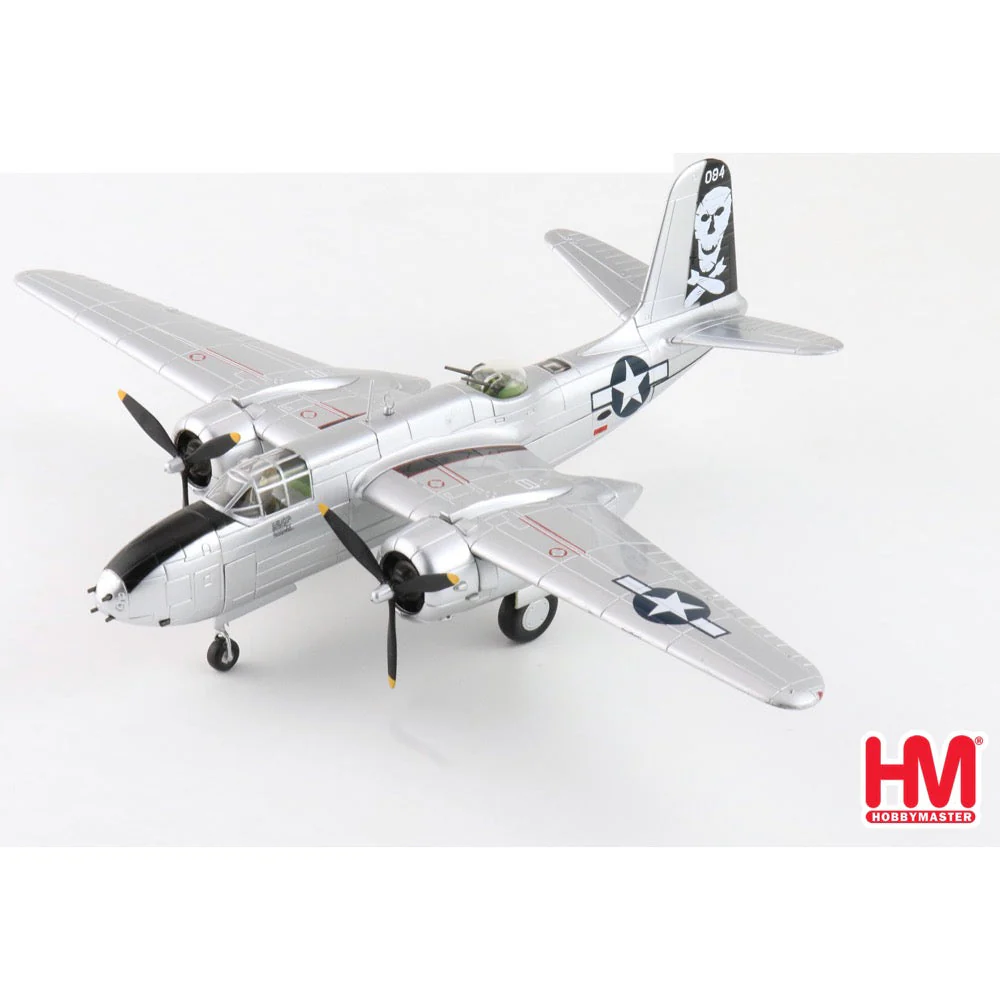
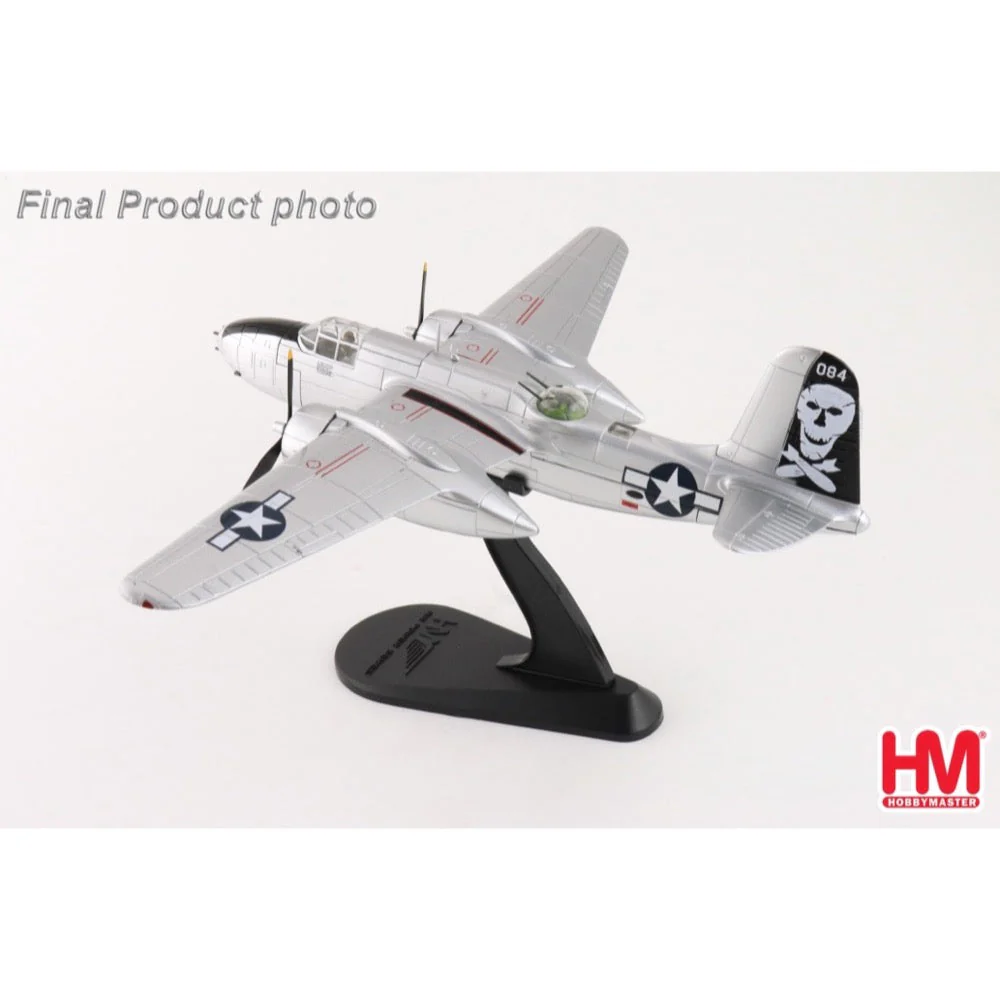
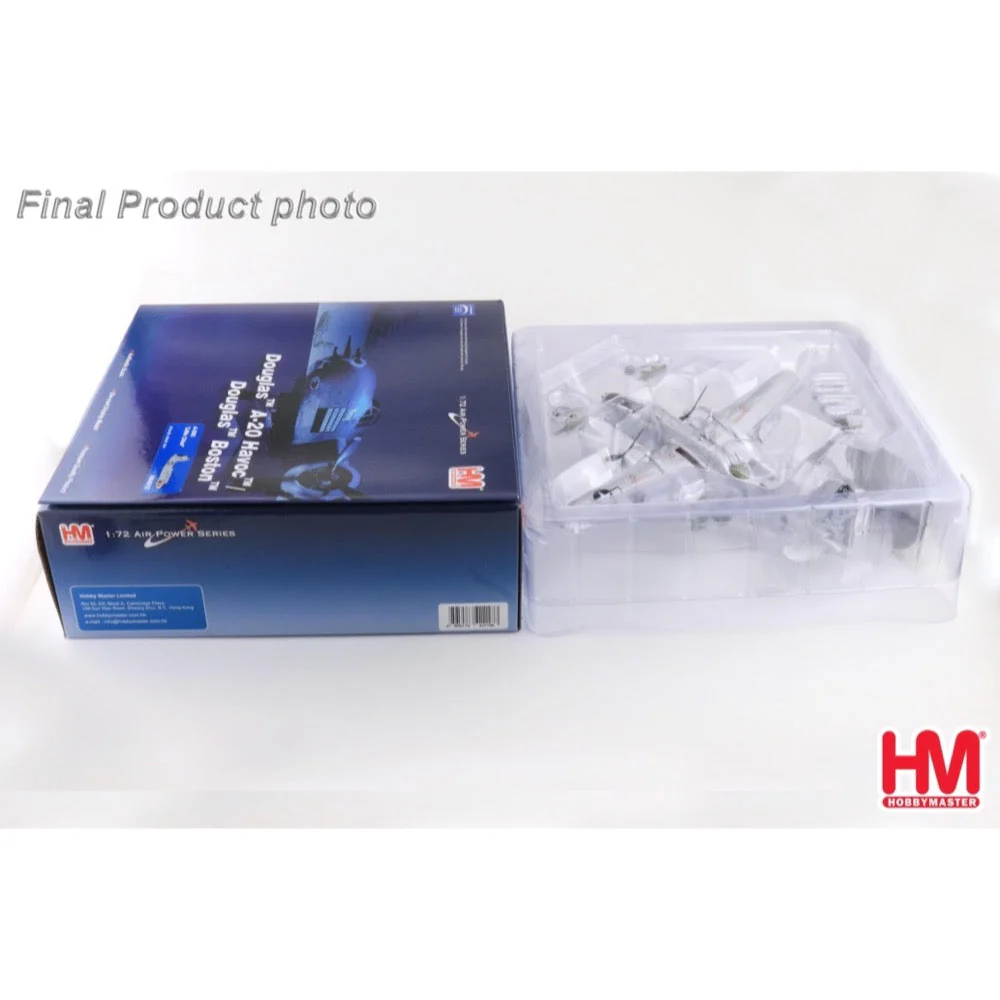
Hobby Master 4212 1/72 A-20G Little Chief 321st BS USAAF 1944
With war approaching America knew it would be called upon to aid their Allies so a new aircraft would need to be developed. Douglas Aircraft designer Ed Heinemann's DB-7/A-20 was chosen to be the new attack-bomber. The prototype flew in December 1938 with the first production aircraft flew on August 17, 1939. Production ran until September 1944 with 7,478 aircraft built. During WWII these were supplied to French, British, Australian, Dutch and Soviet forces as well as their own U.S. forces.
Douglas A-20G Havoc
Designed as a light attack bomber, the A-20 was first flown on August 17th, 1939.
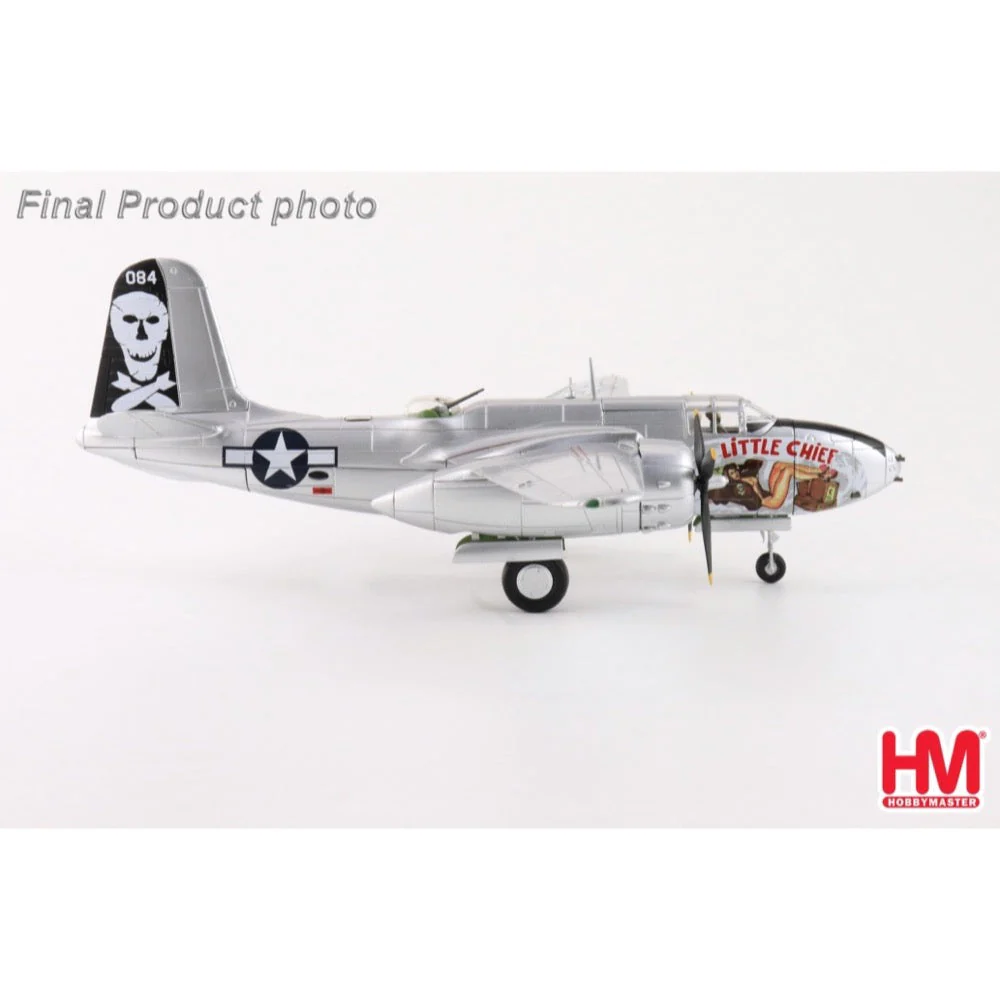
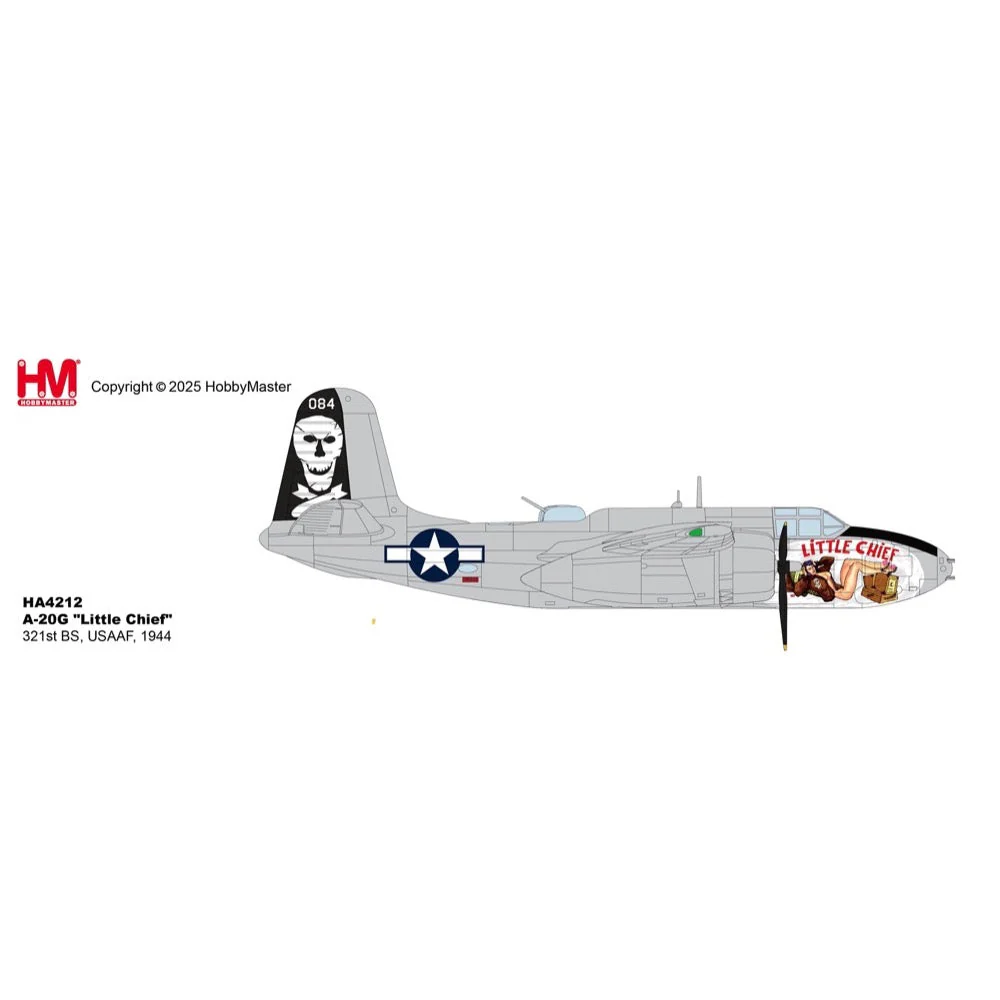
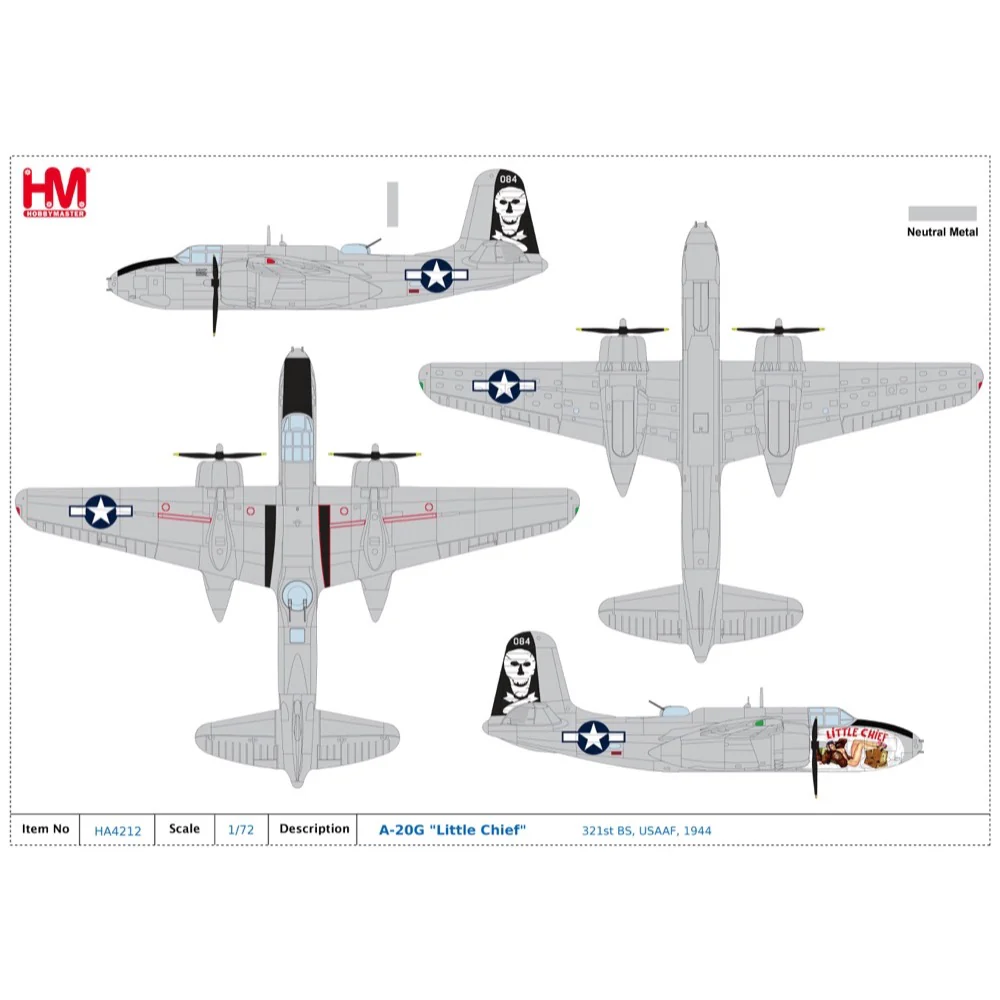
Douglas A-20G #43-9521, “Little Chief” was assigned to the 90th Bombardment Group, 321st Bombardment Squadron during World War II. Its nose art depicted a woman in a leather jacket with a 90th BG patch, her legs resting on boxes labeled “Gin Cairns” and her head on a parachute marked “521”. Although combat capable, Little Chief became a well known “fat cat” transport, flying runs between New Guinea and Australia to bring back fresh food, mail, and alcohol for the squadron. Like many A-20s used in this role, it boosted morale while still supporting routine unit operations. The name “Little Chief” was chosen, in part to complement on of the squadron’s B-24D Liberators, named “Big Chief”.
Features
- Diecast metal construction with some plastic components.
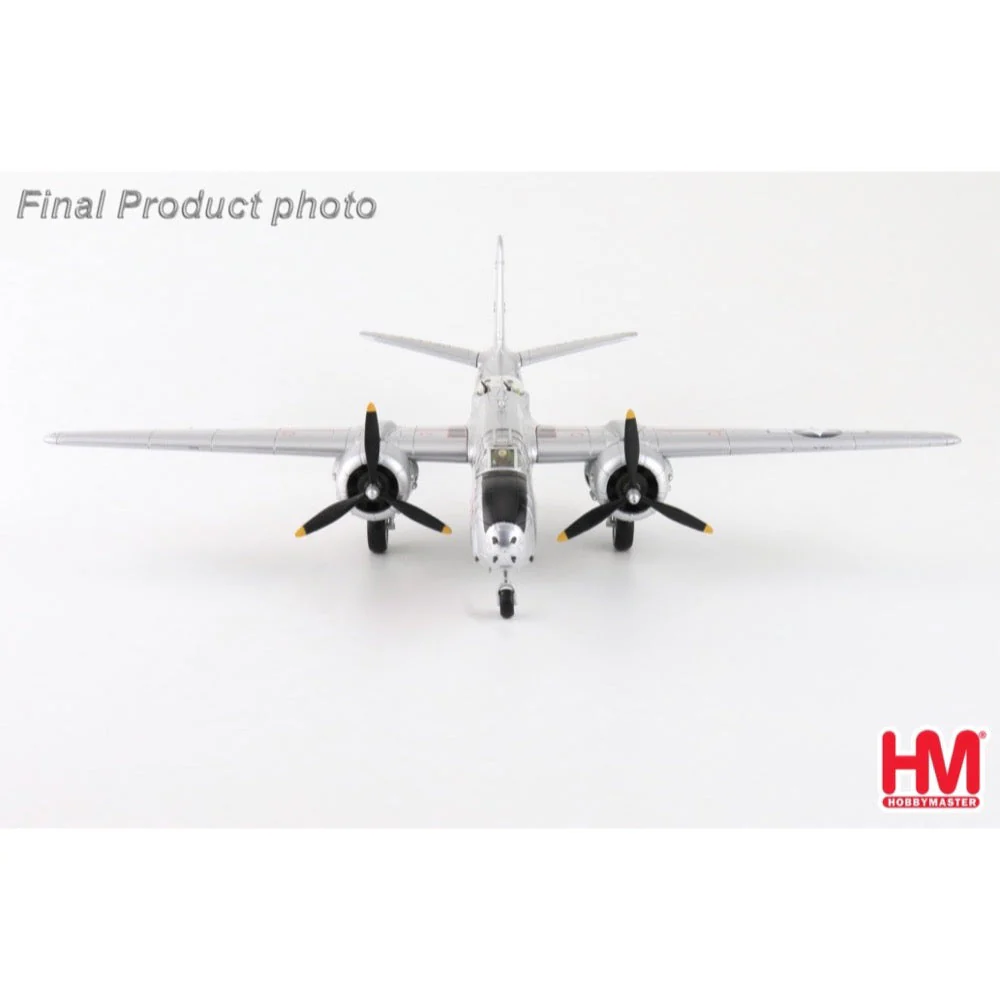
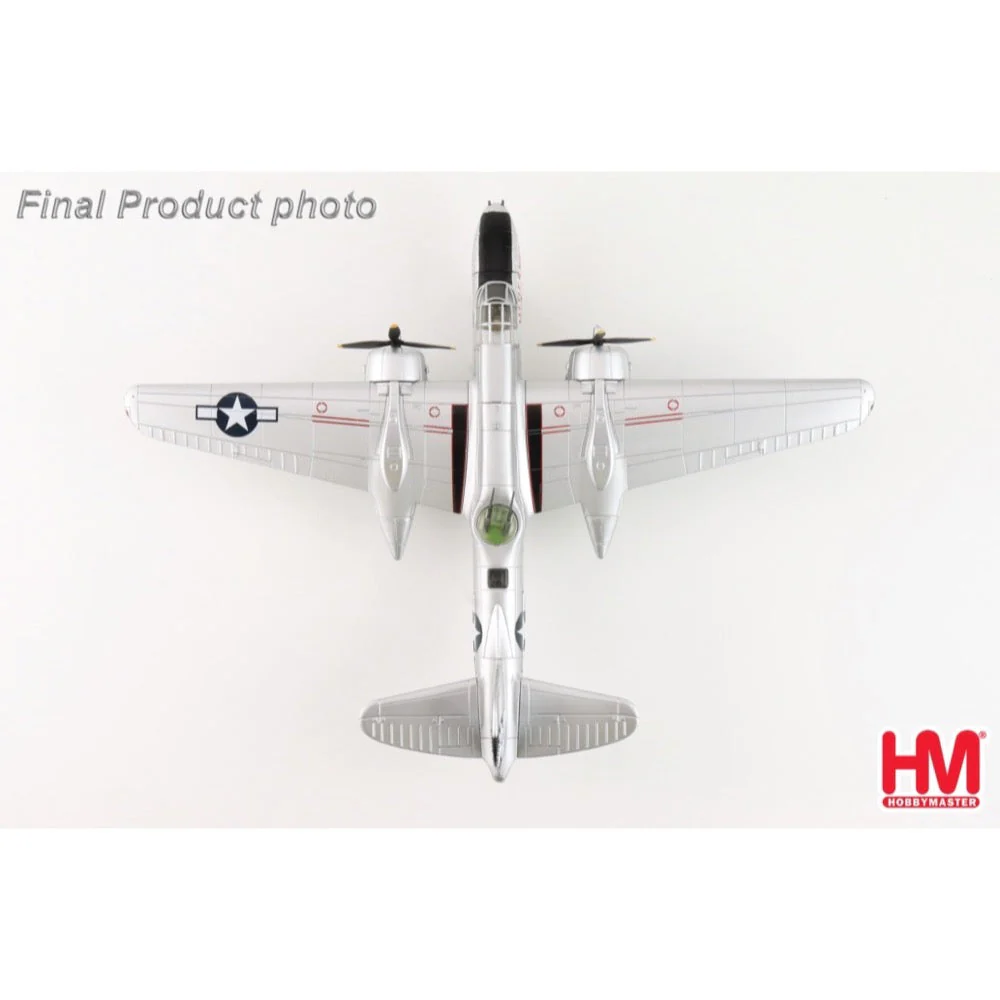
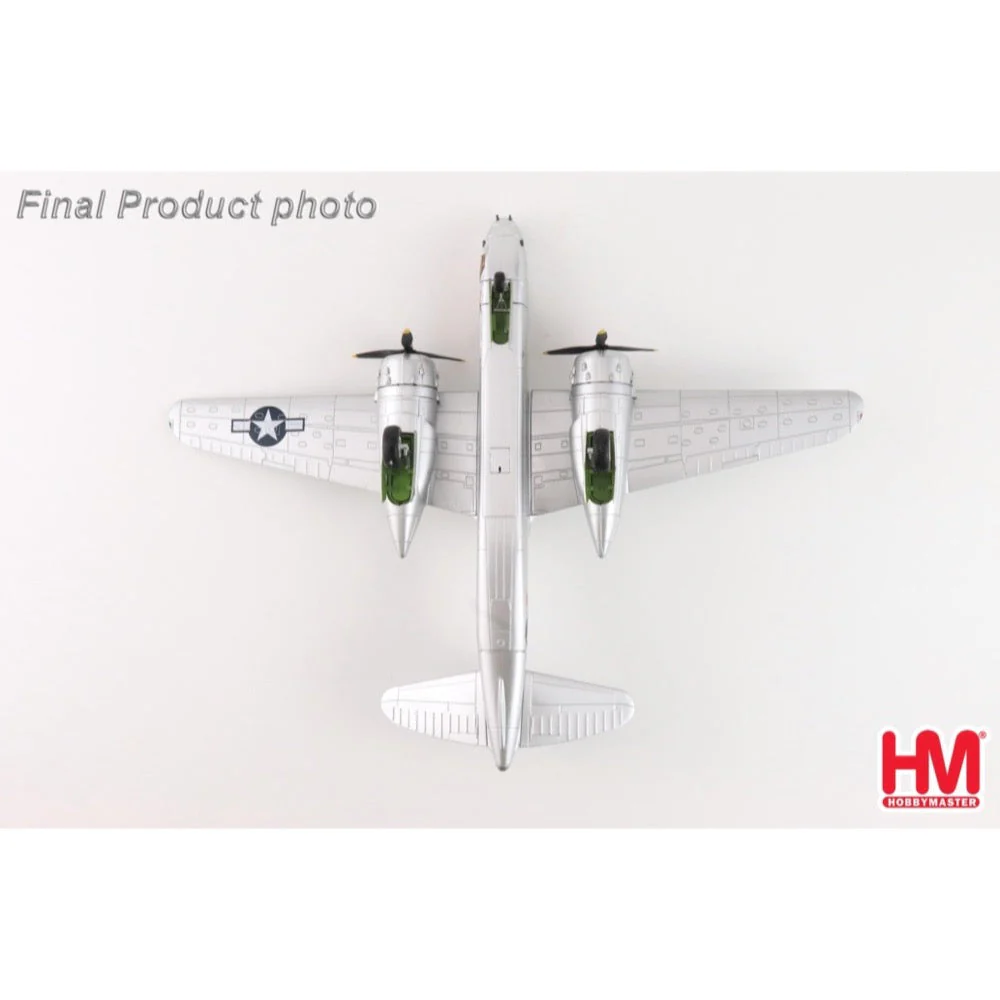
- Realistic panel lines, antennas, access panels and surface details.
- Pad printed markings and placards that won't fade or peel like decals.
- Presentation stand to display the aircraft "in flight".
- Accurately detailed underside with concealed screwheads.
More Images

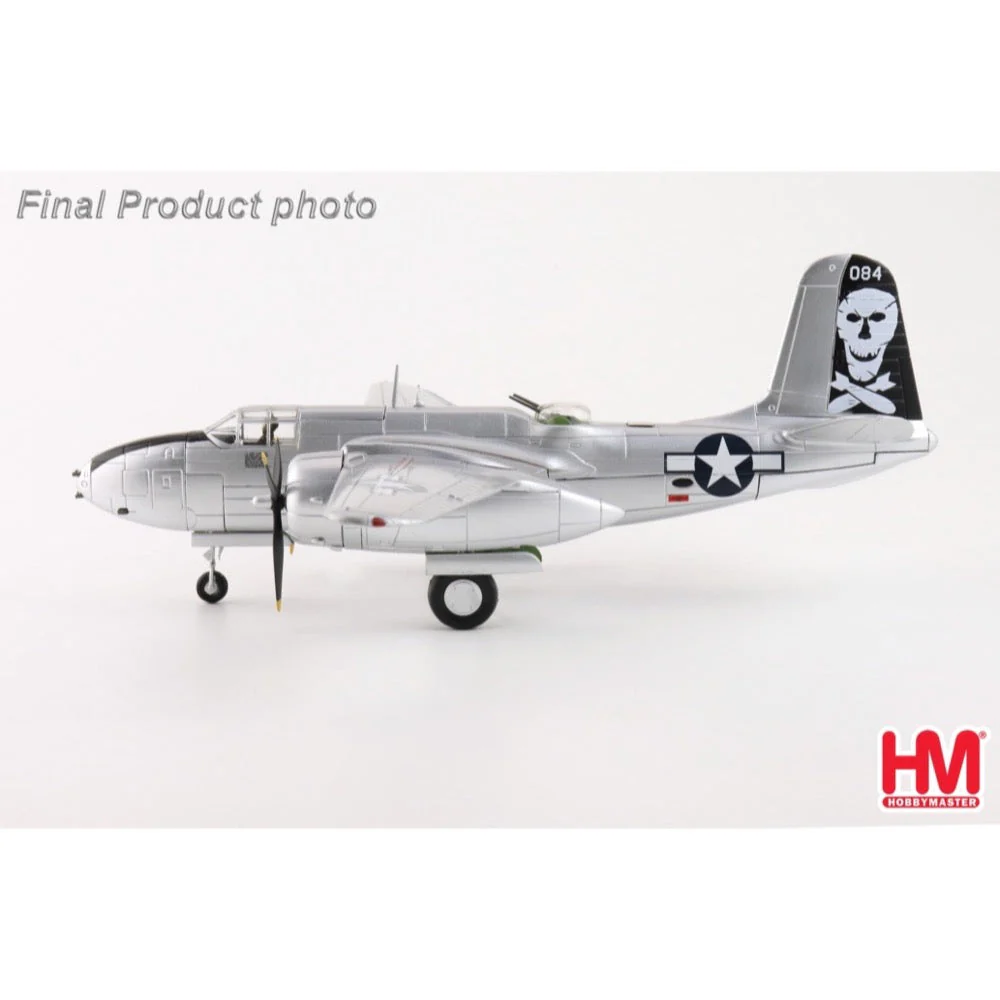
Hobby Master 4212 1/72 A-20G Little Chief 321st BS USAAF 1944
With war approaching America knew it would be called upon to aid their Allies so a new aircraft would need to be developed. Douglas Aircraft designer Ed Heinemann's DB-7/A-20 was chosen to be the new attack-bomber. The prototype flew in December 1938 with the first production aircraft flew on August 17, 1939. Production ran until September 1944 with 7,478 aircraft built. During WWII these were supplied to French, British, Australian, Dutch and Soviet forces as well as their own U.S. forces.
Douglas A-20G Havoc
Designed as a light attack bomber, the A-20 was first flown on August 17th, 1939.
Douglas A-20G #43-9521, “Little Chief” was assigned to the 90th Bombardment Group, 321st Bombardment Squadron during World War II. Its nose art depicted a woman in a leather jacket with a 90th BG patch, her legs resting on boxes labeled “Gin Cairns” and her head on a parachute marked “521”. Although combat capable, Little Chief became a well known “fat cat” transport, flying runs between New Guinea and Australia to bring back fresh food, mail, and alcohol for the squadron. Like many A-20s used in this role, it boosted morale while still supporting routine unit operations. The name “Little Chief” was chosen, in part to complement on of the squadron’s B-24D Liberators, named “Big Chief”.
Features
- Diecast metal construction with some plastic components.
- Realistic panel lines, antennas, access panels and surface details.
- Pad printed markings and placards that won't fade or peel like decals.
- Presentation stand to display the aircraft "in flight".
- Accurately detailed underside with concealed screwheads.
Product Information
Product Information
Shipping & Returns
Shipping & Returns
Description
With war approaching America knew it would be called upon to aid their Allies so a new aircraft would need to be developed. Douglas Aircraft designer Ed Heinemann's DB-7/A-20 was chosen to be the new attack-bomber. The prototype flew in December 1938 with the first production aircraft flew on August 17, 1939. Production ran until September 1944 with 7,478 aircraft built. During WWII these were supplied to French, British, Australian, Dutch and Soviet forces as well as their own U.S. forces.
Douglas A-20G Havoc
Designed as a light attack bomber, the A-20 was first flown on August 17th, 1939.
Douglas A-20G #43-9521, “Little Chief” was assigned to the 90th Bombardment Group, 321st Bombardment Squadron during World War II. Its nose art depicted a woman in a leather jacket with a 90th BG patch, her legs resting on boxes labeled “Gin Cairns” and her head on a parachute marked “521”. Although combat capable, Little Chief became a well known “fat cat” transport, flying runs between New Guinea and Australia to bring back fresh food, mail, and alcohol for the squadron. Like many A-20s used in this role, it boosted morale while still supporting routine unit operations. The name “Little Chief” was chosen, in part to complement on of the squadron’s B-24D Liberators, named “Big Chief”.
Features
- Diecast metal construction with some plastic components.
- Realistic panel lines, antennas, access panels and surface details.
- Pad printed markings and placards that won't fade or peel like decals.
- Presentation stand to display the aircraft "in flight".
- Accurately detailed underside with concealed screwheads.